Artists Investment Consignment Art Sourcing Blog About Contact

Artist Spotlight — April 2026

Tyler Shields: From Celebrity Photography to Investment-Grade Art

How the photographer who built a career shooting Hollywood became one of the most collected names in contemporary fine art — and why serious collectors are acquiring his work now, before the secondary market price reflects his full trajectory.

Reading Time 16 minutes
Topics Investment & Artist Profile
Updated April 2026
01

Why Tyler Shields Belongs in a Serious Collection

Tyler Shields is one of the most recognizable names in contemporary fine art photography. His work appears in homes and offices of collectors who have never attended a gallery opening — because his images circulate through culture at a scale most fine art photographers never achieve. That cultural saturation is not incidental to the investment case. It is the investment case.

The highest-performing photographic works in any secondary market share a common attribute: the artist's name carries meaning outside the art world. Robert Mapplethorpe's prints trade at auction for six figures not solely because curators admire the composition — it is because Mapplethorpe is a cultural shorthand recognized by anyone who has been near a museum in the last four decades. Helmut Newton's work commands premium prices in part because his images have appeared in Vogue, advertising campaigns, and retrospectives that generated recognition well beyond the collector base.

Shields occupies a contemporary version of that position. His celebrity portraiture — work made with and for Hollywood's most recognizable figures — created a level of name recognition among non-collectors that most fine art photographers spend entire careers failing to achieve. That recognition generates demand from a collector pool that extends far beyond traditional gallery buyers. It is the structural precondition for secondary market performance.

3–10 Typical Edition Size per Image
15+ Years of International Exhibition
Source Provocateur = Primary Gallery Pricing

This guide exists for collectors who have encountered Shields' work and want to understand the investment case with rigor — not marketing language. We cover his career arc, the market data, what the edition structure means for appreciation potential, and how to start building a position in his work at the most advantageous entry point available.

We represent Tyler Shields directly. That means we have a financial interest in you buying his work. We believe the ethical response to that conflict is transparency — so this guide gives you the analytical framework to evaluate that decision for yourself, not just a brochure telling you it is a great idea.

02

Career Trajectory: From Set Photography to Fine Art

Understanding why Tyler Shields' work commands the prices it does — and why those prices are likely to move higher — requires understanding how he arrived at his current position. His career arc is not a straight line from art school to gallery. It is a more unusual trajectory, and that unusual path is precisely what gives his work its market characteristics.
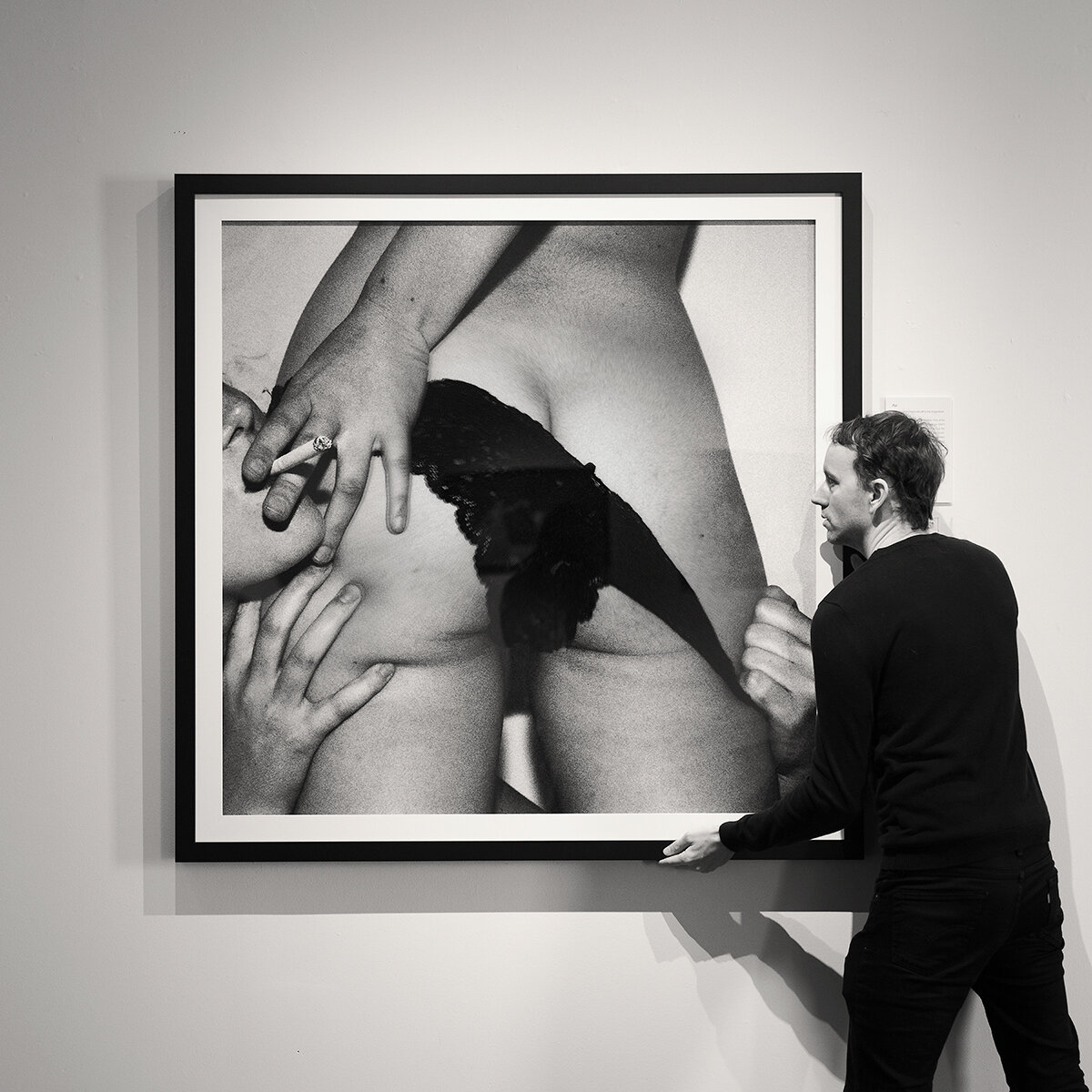
Tyler Shields fine art photography — investment-grade limited editions

Tyler Shields fine art photography — limited editions available through Provocateur Gallery as the source gallery.

The Celebrity Photography Foundation

Shields built his reputation photographing celebrities — A-list actors, musicians, athletes, and cultural figures at the height of their fame. This was not paparazzi work. It was collaborative, meticulously styled, and artistically directed. The subjects were willing participants in a visual narrative that Shields controlled completely. The images that resulted were cinematic, provocative, and impossible to categorize as either editorial photography or fine art in the conventional sense. That ambiguity turned out to be valuable.

The celebrity connection did something critical for his fine art trajectory: it made his name searchable by people who had never set foot in a gallery. When Emma Roberts, Lindsay Lohan, or Heather Morris shared a Shields photograph, the reach was not measured in gallery foot traffic — it was measured in global media impressions. Shields' name became associated with a visual language — bold, cinematic, psychologically intense — that transcended any single subject.

Key Series and Their Significance

Provocateur is the series that gave this gallery its name, and for collectors it represents Shields at his most iconic. The works in this series — dark, theatrically lit, narratively charged — established the visual signature that collectors now recognize immediately. Editions are small. The works have been exhibited internationally and collected by institutions as well as private buyers. For collectors seeking the work most directly associated with Shields' artistic identity, Provocateur is the defining body of work.

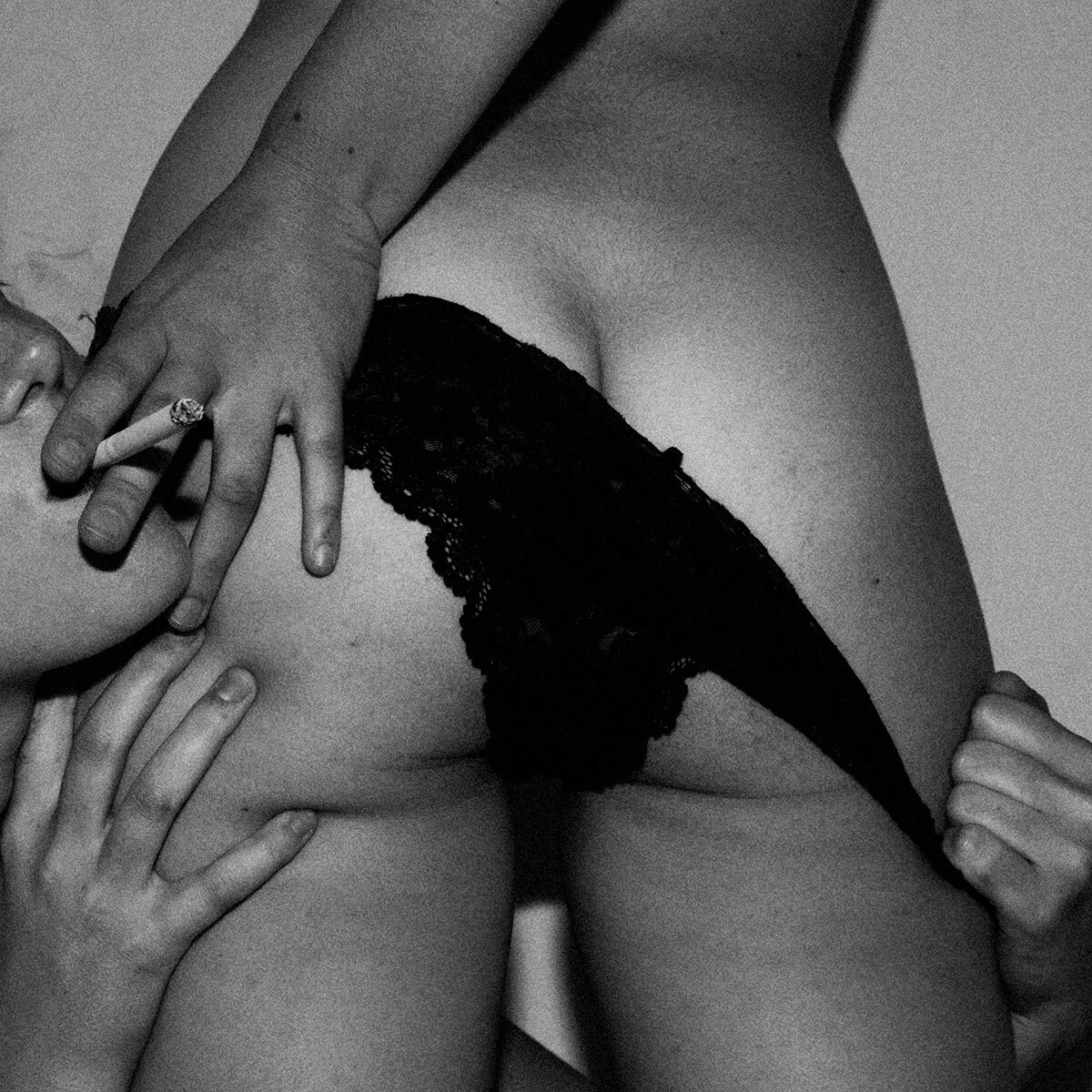
Mouthful is his most provocative and widely published series — the body of work that generated the broadest editorial coverage and the most significant crossover between the fine art and celebrity media worlds. The images are confrontational by design: they demand a response, which is exactly the characteristic that drives secondary market demand. Works that provoke reaction outperform works that merely please.

Suspense represents Shields at his most explicitly cinematic — long-exposure, narrative, technically demanding images that owe their visual grammar to classic Hollywood as much as to photography's fine art tradition. The series draws collectors who approach photography as a filmic medium, and it has strong crossover appeal to the entertainment industry collector base.

Life Is Not A Fairytale combines the dark theatricality of Provocateur with an explicit fairy-tale visual vocabulary — the subverted familiar image that has proven consistently strong in secondary market performance across many artists and media. When viewers bring prior visual knowledge to a work, recognition creates emotional engagement, and emotional engagement drives the desire to own.

Museum Placements and Institutional Recognition

Fine art photography achieves investment-grade status through a combination of collector demand and institutional validation. Shields' work has appeared in gallery exhibitions internationally, been featured in major publications including Vanity Fair, GQ, and Rolling Stone, and been acquired by private and institutional collectors across the United States, Europe, and Asia. Institutional placement does not guarantee appreciation, but it confirms that the work is being evaluated as fine art — not celebrity ephemera — by people whose professional judgment carries weight with future buyers.

The trajectory matters more than the current position. The collectors who bought Warhol at gallery prices in the 1970s were not buying a proven auction commodity — they were buying an artist whose institutional trajectory was clearly upward, whose cultural presence was expanding, and whose edition supply was finite. The analytical question for any contemporary acquisition is the same: where is this artist's trajectory pointing? For Shields, the answer is unambiguous. See the full Tyler Shields artist page for his current exhibition history and available works, or read the companion profile Tyler Shields: From Hollywood to Park City Fine Art.
03

Market Performance: Prices, Editions & Secondary Market

Investment arguments for contemporary photography are strengthened when grounded in documented market behavior. Here is an honest account of where Tyler Shields' market stands, what the edition structure means for appreciation potential, and how his pricing compares to the broader market for contemporary photographic prints.

Primary Market Pricing

Tyler Shields' work is priced across a range that reflects edition size, image format, and series significance. Entry-level acquisitions — smaller format prints from smaller editions — begin in the $3,500–$8,000 range. Large-format works from his principal series — Provocateur, Mouthful, Suspense, Life Is Not A Fairytale — are priced from $15,000 into the $75,000+ range depending on size, edition position (earlier editions typically carry higher valuations), and whether the work is from a sold-out or near-sold-out edition.

This pricing structure places Shields firmly in the middle tier of investment-grade contemporary photography — above entry-level commercial photography, well below the auction-market ceiling of established photographers, and precisely in the zone where primary acquisitions have the most compelling appreciation potential. Works at this price point can double or triple in secondary market value as the artist's institutional trajectory matures without requiring the artist to achieve posthumous cult status to justify the return.

Tyler Shields photography — investment analysis and edition structure

Limited-edition works with documented provenance and certificates of authenticity — all Provocateur acquisitions include complete documentation.

Edition Structure and Scarcity

Edition size is the most important structural variable in photographic investment. An open edition cannot appreciate because supply is unlimited. An edition of 500 creates modest scarcity but not enough to drive meaningful secondary market premiums until the work achieves near-legendary status. An edition of 3–10 creates genuine scarcity within a collector timeframe — when an edition of 7 is 70% placed, the remaining prints carry premium pricing pressure, and the secondary market for sold-out editions activates immediately.

Shields works in tight editions — typically 3 to 10 prints per image, with edition number and total certified on each work. This is the edition structure of a photographer who thinks about market positioning, not volume. For collectors, this matters because: (1) primary market acquisition is available for a finite window, (2) secondary market pricing for sold-out works already exceeds primary pricing for comparable images, and (3) the total universe of available Shields prints is far smaller than his name recognition suggests — which is exactly the scarcity-demand mismatch that drives appreciation.

Secondary Market Trends

The secondary market for Tyler Shields works has shown consistent demand, particularly for early editions from the Provocateur and Mouthful series. Collectors who acquired works at primary gallery pricing in the early 2010s have seen secondary market valuations move materially higher on sold-out editions. This is not uniform — not every image appreciates, and resale timing matters — but the directional trend is consistent with an artist building institutional trajectory rather than coasting on celebrity association.

For context on how photographic print markets behave as artists mature, the full auction data and ROI case studies for comparable artists — including documented examples of edition appreciation at Warhol, Banksy, and Wesselmann — are available on our Investment Research page. The structural patterns apply directly to evaluating Shields' market position.

Comparable Artist Benchmarks

Benchmarking Shields against photographers with established secondary markets is instructive. Helmut Newton's photographic prints — limited editions in the 10–25 range — sell at Christie's and Sotheby's for $80,000–$400,000 for images originally issued at gallery pricing of $5,000–$20,000. Robert Mapplethorpe's prints follow a similar pattern, with edition scarcity and cultural significance driving secondary market pricing to multiples of primary acquisition cost. Both photographers had the same structural characteristics Shields exhibits today: a signature visual language, a distinctive cultural presence, strictly limited editions, and a collector base that extended beyond the traditional art world.

The benchmark comparison does not guarantee Shields achieves the same trajectory — nothing guarantees art appreciation, and responsible collectors understand this. For a parallel case study in contemporary photographic investment with a different visual vocabulary, see our analysis of George Byrne's photography market. But the structural characteristics for Shields are there. The question is whether the cultural moment, the institutional trajectory, and the scarcity conditions align. For Shields, they do.

04

The Investment Thesis for Tyler Shields

Investment theses for contemporary art are usually vague — "he's important," "the work is significant," "prices will go up." Here is a structured argument for why Shields' work appreciates, what conditions must hold, and what risks exist. Informed collectors make better decisions.

The Four Appreciation Drivers

1. Edition scarcity with expanding demand. Shields produces 3–10 prints per image. His collector base — already spanning traditional gallery buyers, entertainment industry collectors, and high-net-worth individuals who discovered his work through celebrity association — is growing. When an expanding demand pool encounters a finite supply, basic market mechanics produce appreciation. The sold-out editions in his catalog are already demonstrating this dynamic in the secondary market.

2. Cultural relevance that outlasts celebrity. The risk for photographers who build reputations through celebrity association is that the relevance dissolves when the cultural moment passes. Shields has navigated this successfully. The work he is best known for — Provocateur, Mouthful, Suspense — is valued for its visual language, not for which celebrity appears in it. The images stand as images. That is the test of whether celebrity association produces fine art value or merely publicity value. Shields passes it.

3. Gallery representation as the institutional signal. Representation by a gallery with investment-focused programming — which is precisely what Provocateur provides — signals to the collector market that the artist is being managed for long-term value. Collectors with serious art budgets evaluate gallery relationships as part of artist diligence. Source gallery representation, maintained consistently over time, is one of the institutional signals that precedes the kind of auction house attention that drives the broadest secondary market activity.

4. Crossover collector base expands the demand ceiling. Traditional art market appreciation is constrained by the size of the collector base that follows an artist. The ceiling for most fine art photographers is determined by how many serious collectors are aware of and interested in the work. Shields' crossover into celebrity and entertainment culture has created awareness in a collector pool — high-net-worth individuals in entertainment, sports, tech, and business — that does not attend art fairs or read critical art reviews. That expanded awareness pool raises the demand ceiling above what a purely gallery-market trajectory would produce.

The Risk Assessment

No honest investment analysis omits risk. For Tyler Shields specifically, the risks a prudent collector should evaluate are: (1) cultural relevance fatigue — the celebrity association that currently generates awareness could become dated if the artists and subjects he is most identified with fall out of cultural circulation; (2) market concentration — a collector base with significant entertainment industry representation can be more volatile than traditional art market buyers during periods of economic dislocation; and (3) attribution and provenance risk — works acquired through secondary sources without complete gallery documentation carry authentication risk that affects future resale value.

The first risk is mitigated by the body of work's independence from any specific subject. The second is structural to the market segment but is partially offset by Shields' international collector base. The third risk is the strongest argument for acquiring exclusively through the source gallery — which is Provocateur.

The full investment research framework, including how we evaluate these factors across all represented artists, is at /investment.

05

The Collector's Guide: How to Start Acquiring

First-time collectors often make the same structural mistakes: they focus on which image they like best, they underweight edition number and remaining availability, and they neglect provenance documentation. Here is how a disciplined collector approaches building a position in Tyler Shields' work.

Edition Numbers: Why They Matter

When an edition is numbered 1/7, 2/7, 3/7 — the number before the slash is the edition number, and the number after is the total edition size. For photographic prints, conventional wisdom holds that lower edition numbers (1/7, 2/7) carry premium status in some markets. What matters more for investment purposes is the total edition size (smaller is better for scarcity-driven appreciation), how many prints from the edition have been placed (higher placement percentage = tighter secondary market supply), and whether the edition has been officially closed by the artist and gallery.

Ask your gallery advisor for the current edition status of any work you are considering. Provocateur maintains complete edition tracking for all Shields works. Works from editions that are 70%+ placed are under significantly more supply pressure — and command a premium — compared to works early in their edition lifecycle.

Price Entry Points

For collectors new to Shields' work, we recommend approaching the collection in tiers. A first acquisition in the $5,000–$15,000 range allows you to evaluate how the work lives in your space, confirm the physical quality of the print, and establish a relationship with the gallery before committing larger capital. Entry-level works in this range retain their value adequately and provide full exposure to the artist's trajectory. They are not the highest-appreciation-potential works in the catalog, but they are the right first step.

For collectors with established art budgets or who have already evaluated Shields and want to build a meaningful position, the $15,000–$50,000 range offers the strongest combination of appreciation potential and remaining primary market availability. These are the works — larger format, from principal series, in editions with meaningful secondary market records — where the structural thesis is clearest.

What to Look for in Provenance

  • Certificate of Authenticity: Signed by the artist, specifying title, medium, dimensions, edition number, and total edition size. Non-negotiable for any investment-grade acquisition
  • Gallery invoice: On gallery letterhead, specifying all work details. The paper trail that supports future resale value and any tax strategy you may employ
  • Edition registration: Confirmation that the specific print is registered in the gallery's edition records — protects against duplicate numbering disputes
  • Framing documentation: For works requiring conservation-grade framing, documentation of materials used. Affects long-term condition and value
  • Condition report: Rare for new acquisitions but standard for secondary market purchases. Request one for any resale-market work

Series Selection Strategy

The series that offers the clearest combination of aesthetic accessibility and investment structure is the Provocateur series — it is Shields at his most iconic, the works most directly associated with the gallery's own name, and the body of work with the longest track record of collector demand. For collectors entering specifically for investment purposes, Provocateur and Mouthful are the series with the strongest secondary market evidence.

For collectors whose primary motivation is aesthetic — they want work that will be meaningful to live with for decades — the recommendation shifts. Suspense tends to appeal most strongly to collectors who are drawn to cinematic narrative, Life Is Not A Fairytale appeals to those who appreciate art that plays with cultural imagery. Both have investment characteristics that make them credible holdings; neither should be dismissed as less serious than Provocateur.

Our complete collecting guide for building a structured art collection — regardless of artist — is available at /collecting-guide. The principles apply directly to a Shields-focused strategy. For those who want to encounter his work in person, our Park City Gallery Stroll guide covers the monthly events where Provocateur Gallery features new editions.

06

Tax Angle: Section 179 & Business Acquisition Strategy

For business owners acquiring art, Tyler Shields' work has a tax dimension worth understanding before making acquisition decisions. The same investment-grade characteristics that make his photography compelling for collectors also make it eligible — in the right circumstances — for significant business tax treatment.

Section 179 and Photography

Fine art photography, including limited-edition prints by internationally exhibited artists, is treated the same as paintings and sculpture for Section 179 purposes. A Shields print displayed in an active business location — a law firm, medical practice, corporate office, hospitality property, or any client-facing commercial space — may qualify for immediate expensing under Section 179, with a 2026 limit of $1.16 million per business entity.

The practical implication: a business owner acquiring a $25,000 Shields print for display in their office may be able to expense the full cost in the acquisition year, reducing their effective cost basis to $15,000–$17,500 after federal tax savings (depending on their marginal rate and state taxes). The work continues to appreciate. The tax benefit does not reverse if the work goes up in value. This is the structural advantage of direct gallery ownership over fractional platforms — the physical work in your physical space is what activates the tax treatment.

De Minimis Safe Harbor for Entry-Level Works

For smaller Shields works priced at or below $2,500, the de minimis safe harbor applies without any of the complexity of Section 179 analysis. Works at this threshold can be fully expensed in the acquisition year as a simple business purchase, with no depreciation schedule required. For business owners wanting to test the Shields acquisition strategy before committing larger capital, entry-level works in this price range are the cleanest first step.

Documentation from Provocateur

All Provocateur acquisitions come with complete documentation: gallery invoice in the business entity's name (we structure this correctly at acquisition, not after the fact), certificate of authenticity, edition registration confirmation, and condition documentation. This is the paper trail that makes Section 179 claims defensible under scrutiny and that supports future resale value regardless of tax strategy. Proper documentation at acquisition is not a formality — it is part of the financial value of buying through a professional gallery.

For the complete guide to art investment tax strategy — Section 179, de minimis safe harbor, bonus depreciation, and charitable giving strategies — see our detailed guide at /blog/art-investment-tax-strategy. The strategies covered there apply directly to Shields acquisitions.

07

Why Buy Through Provocateur

There are multiple ways to acquire Tyler Shields photography — auction houses, secondary market dealers, resellers, and the occasional private transaction. Here is an honest account of why buying through Provocateur Gallery as the source gallery is the structurally superior option, and what you give up by going elsewhere.

The Source Gallery Advantage

Provocateur is Tyler Shields' represented gallery. That means we work directly with the artist, have access to primary market pricing, and maintain complete records of every edition we have sold. Source gallery pricing is the lowest pricing available in the market — by definition, because the work must pass through us before it reaches any secondary source. If you can acquire from the source gallery, you should. The alternative is paying a markup over that price, which means your appreciation hurdle is higher before you break even on the premium you paid.

The price-match guarantee we offer — we will match or beat any verifiable primary market pricing for Shields works from authorized dealers — exists because we are confident that our pricing reflects the most competitive available. If another authorized source offers a lower price on a comparable work with equivalent documentation, we want to know about it, and we will match it.

Authentication and Provenance

Authentication disputes in the secondary market for photographic prints are more common than buyers expect. Edition records are not universally maintained with rigor; numbering inconsistencies exist; works sold through unofficial channels may lack the documentation that future buyers require. Buying through the source gallery eliminates this risk entirely. Our edition records are complete, our certificates of authenticity are primary source documents (not third-party certifications), and the provenance chain is unbroken from artist to gallery to collector.

For collectors who may sell in the future — and all serious collectors should consider the eventual exit when making acquisitions — clean provenance from the source gallery is the difference between a straightforward resale transaction and one that requires authentication research, expert opinions, and potential buyer discounts for unresolved provenance questions.

Direct Artist Relationship

Because we represent Shields directly, Provocateur collectors benefit from access that secondary market buyers do not have. Information about upcoming works before they are publicly available. Insight into edition availability and trajectory. The ability to request specific formats or series directly with the gallery team, which works directly with the artist to accommodate significant collector requests. This relationship dimension is not quantifiable in the way that edition pricing is — but for collectors who take art seriously, it matters.

Framing, Installation, and Ongoing Service

Investment-grade photography requires conservation-grade framing to maintain value. Improper framing — non-UV-protective glazing, acidic materials, improper tensioning — degrades a photographic print in ways that are irreversible and that significantly affect resale value. Provocateur provides framing services using museum-grade materials, with documentation of materials used included in the acquisition package. Installation services are available for significant acquisitions.

For collectors who want to start their Shields acquisition, the inquiry form below connects you directly with our gallery team. We respond within 24 hours and can schedule a consultation to discuss your collection goals, budget, and the works currently available. Submit an inquiry here.

08

Frequently Asked Questions

The most common questions from collectors researching Tyler Shields' photography and the investment case for acquiring his work.

Next Step

Acquire Tyler Shields Through the Source Gallery

Provocateur Gallery represents Tyler Shields directly. That means primary market pricing, complete provenance documentation, framing services, and a direct relationship with the artist. Whether you are building your first collection or adding a significant work to an established one, starting at the source gallery is the right structure. Browse current availability or schedule a consultation with our team to discuss which works are available and which align with your collection goals.

Investment disclaimer: This content is for educational and informational purposes only and does not constitute investment advice. Past appreciation does not guarantee future returns. Art should be acquired primarily for its aesthetic and cultural value; financial returns are not guaranteed. Tax strategies depend on specific facts and circumstances — consult a qualified advisor. Full investment disclaimer.