Collector's Foundation — Park City Art Market
Park City has emerged as one of the Mountain West's premier art destinations. Whether you are purchasing your first work or building a serious collection, this guide walks you through everything you need to know about evaluating artwork, working with galleries, and building a collection with genuine financial structure.
In This Guide
Over the last decade, Park City has quietly evolved from a ski resort with galleries into one of the Mountain West's most serious regional art markets. The shift did not happen by accident — it reflects the convergence of wealth, cultural engagement, and a genuine commitment to building artist communities.
The numbers tell the story. Park City's population of 8,000 supports more than 16 professional galleries. The median home price exceeds $1.2 million, and a significant portion of the market consists of second-home buyers with disposable income earmarked for art and cultural investment. Sundance Film Festival, held annually in January, brings international attention and a globally connected clientele. The Gallery Stroll — held the last Friday of every month — has become a recurring cultural touchpoint that would be exceptional in cities 10 times Park City's size.
What distinguishes Park City from other resort art markets is the depth of artist representation. Tyler Shields, one of the most successful contemporary photographers working today, maintains a primary gallery relationship in Park City. George Byrne, whose large-format photography appears in major museum collections, is based here. Jinwoo Prensena and other internationally exhibited artists have chosen to work with Park City galleries as their primary market rather than treating it as a secondary or seasonal outlet.
For collectors, this convergence creates an unusual opportunity. You can acquire investment-grade work from represented artists in a setting that is accessible and relationship-focused. There is no anonymity, no pressure to compete in auction rooms, and no intermediaries between you and the work. Conversations happen at gallery level, with gallery directors who know the artists personally and understand their trajectory.
Park City also occupies a specific market position: it is neither coastal (New York, Los Angeles) nor Midwestern (Chicago), and it is not an academic art center (like Philadelphia or Boston). This geographic distinctiveness creates advantages for collectors who understand the market. The collector base is sophisticated but not saturated. Galleries are eager to build long-term relationships. Artists are accessible and responsive to collector feedback. Prices, while rising, remain significantly lower than comparable work in coastal markets.
The tax and business environment also matters. Utah's business-friendly regulatory structure, the ability to structure art acquisitions around tax strategies (see our tax strategy guide and our in-depth post on Section 179 and contemporary art as a portfolio hedge), and the proximity to wealth management and legal expertise make Park City an attractive hub for collectors managing six- and seven-figure acquisitions. Not all collectors move to Park City, of course, but many find they are returning multiple times per year for acquisitions, Sundance events, and investor networks.
For first-time collectors, Park City offers the perfect entry point: professional galleries with real expertise, accessible artists, monthly events that create a natural rhythm for collecting, and a community that values education alongside sales. This is where you learn to collect.
Before you acquire your first piece, you need to understand three concepts that separate investment-grade art from decoration: edition size, provenance documentation, and gallery representation. These are not optional details — they are the foundation of every serious collection.
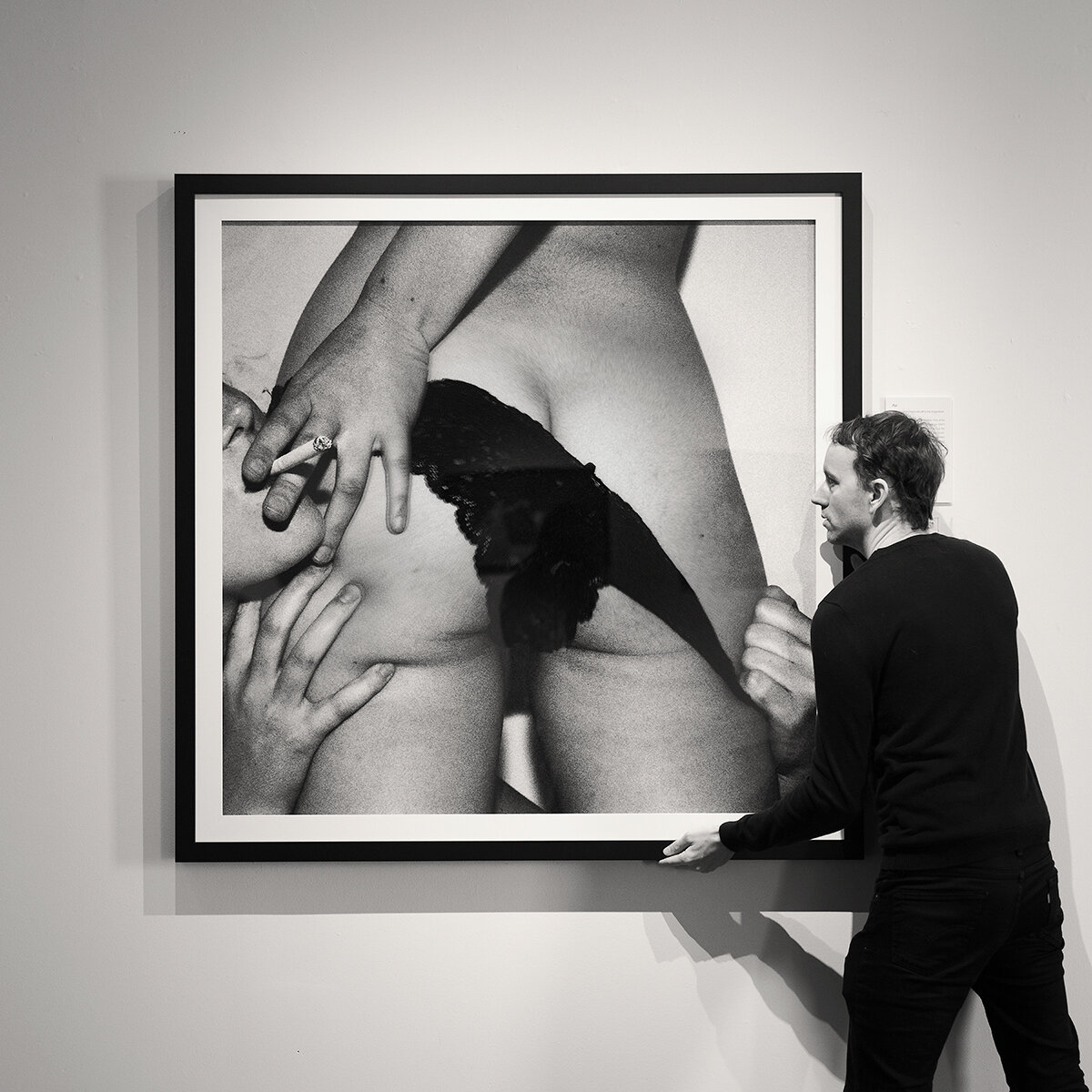
Investment-grade contemporary photography — the kind that carries full provenance documentation, small edition records, and documented artist representation.
Edition size is the single most important factor in determining whether a work will appreciate or depreciate. This is not opinion — it is mathematics applied to supply and demand.
A work produced in an edition of 3–5 pieces has genuine scarcity. When someone wants that specific work and only 5 exist in the world, the seller holds pricing power. Secondary market prices (when collectors resell) often exceed primary market (gallery) pricing precisely because scarcity creates demand elasticity.
Larger editions tell a different story. A work produced in an edition of 50 is unlikely to appreciate, because if a collector cannot find it at one gallery, they can find it elsewhere. The supply satisfies all reasonable demand. Even larger editions — 100, 500, or "open editions" where the artist can print unlimited copies — almost never appreciate. The work may hold its aesthetic value (you can still enjoy hanging it), but it will not appreciate financially.
This is why gallery representation matters: professional galleries carefully edition their work to maintain scarcity. They do not produce a work in 500 copies if the artist is represented at multiple galleries. That would flood the market and destroy value. They produce small editions, raise prices as scarcity is recognized, and move to new work as editions sell out. This disciplined approach is the foundation of artist market development.
When evaluating any artwork in a Park City gallery, always ask: "What is the edition size?" If the answer is "open edition" or "limited edition" without a specific number, move on. If the answer is under 10, ask what fraction of the edition has already sold. If 8 of 10 are sold, only 2 remain — scarcity is already built in, and the work has appreciation potential. If 1 of 10 has sold, the work may still have supply risk: more editions could dampen demand.
Provenance is the documented ownership history of a work. Investment-grade art requires a complete paper trail that can be verified by future buyers, insurance companies, museums, and tax authorities. What should provenance documentation include?
When you purchase a work, request all documentation and store it safely. If you ever sell the work — or more commonly, if you donate it to a museum or charitable organization for tax benefits (see tax strategy) — this documentation determines value. A work by a known artist without proper documentation can appraise and sell for 30–50% less than the same work with complete provenance. Over the life of a $50,000 acquisition, that is $15,000–$25,000 in lost value or tax deduction.
If a gallery cannot or will not provide complete documentation, do not purchase from them. This is a bright-line test of whether they are selling investment-grade work or decorative art.
Not all galleries maintain the same relationship with the artists they sell. The distinction matters significantly for collectors.
Represented Artist: The gallery has an exclusive (or semi-exclusive) relationship with the artist. The gallery controls pricing, editioning, and promotion. The gallery has invested in the artist's career development and has strong incentives to maintain and increase the artist's market value. When you buy from the representing gallery, you are buying at the source — at primary market pricing, with full gallery backing.
Consignment: The gallery is selling on behalf of an owner (usually the artist or a previous collector). The relationship is transaction-focused rather than strategic. The gallery has less control over pricing, less incentive to promote the artist's career, and less accountability for documentation. Consignment work often comes from secondary market sources.
As a first-time collector, prioritize represented artists. The difference you will notice: represented galleries can articulate the artist's career trajectory, they have consistent inventory, they will price-match against other galleries carrying the same artist, and they will educate you about why the work matters. Galleries selling consignment work are often helpful, but they are less invested in your long-term education as a collector.
Ask galleries directly: "Do you represent this artist, or is this consignment?" The straightforward answer signals a professional operation.

Evaluating artwork for acquisition is a learnable skill. Unlike choosing art purely for aesthetic reasons (where personal taste is the only criterion), investment-grade evaluation follows a framework. This framework separates amateur collecting from strategic acquisition.
Investment-grade contemporary photography requires evaluation beyond aesthetics — understanding edition structure, artist trajectory, and market positioning is essential.
1. Does this artist have institutional validation?
Institutional validation means museum exhibitions, significant publication features, and gallery representation in multiple markets. A photographer featured in Artforum or Photography International has more market credibility than one featured only in regional publications. An artist with work in major museum collections (not just group shows, but solo retrospectives or significant acquisitions) has demonstrated institutional endorsement.
This is not about prestige — it is about predictability. Artists with institutional validation have proven they can sustain a market beyond a single gallery's marketing efforts. Their work is likely to remain desirable 10 years from now because collectors, museums, and institutions continue to recognize it.
2. What is the artist's career trajectory?
Is the artist's career expanding or contracting? Are they getting bigger shows, featuring in better publications, winning major prizes? Or are they showing in fewer galleries, featuring in smaller publications, with gallery representation concentrated in a single market?
Upward trajectory signals appreciation potential. Artists whose careers are on the rise — expanding geographic reach, increasing publication prestige, growing collector base — typically see secondary market appreciation. Artists whose visibility is declining rarely appreciate financially.
Gallery directors should be able to articulate this trajectory clearly. If they cannot, the work is likely decorative rather than investment-grade.
3. What is the edition size and how much of it has sold?
Already covered above, but the principle applies here: small editions of high-selling artists with documented demand create appreciation. The combination of both factors matters: a small edition from an unknown artist may not appreciate; a large edition from a known artist will not appreciate.
4. What is the comparable sales history?
Has this artist's work sold at auction? At what prices? Are secondary market prices increasing or stable or declining relative to primary market (gallery) pricing? A work selling at auction for more than gallery pricing is a signal that demand exceeds supply. Work selling at auction for less than gallery pricing is a warning signal.
Ask the gallery for recent auction results for the artist. Professional galleries will have this data. Galleries selling decorator work often cannot provide it.
5. Can you commit to a 5–10 year holding period?
Art is illiquid. Selling takes time, typically 3–6 months to find a buyer if you price realistically. If you need liquidity, art is not the right asset class. But if you can commit to holding the work for 5–10 years, the appreciation potential increases significantly as institutional validation accumulates and editions sell out.
If you cannot confidently answer 6 of 8 of these questions, ask the gallery director to walk you through the framework. That conversation will quickly reveal whether you are dealing with investment-grade work or decoration.
For a deeper analysis framework, see our Complete Collecting Guide. For specific artist research tools and auction data analysis, see the Investment Research page.
Many first-time collectors feel awkward in galleries. There is an assumption that you are supposed to know things you do not know, that you will say something wrong, or that you are not sophisticated enough to be there. These concerns are unfounded. Professional galleries exist to educate collectors. Building a genuine relationship with a gallery director is one of the most valuable parts of learning to collect.
Ask for a conversation, not a hard sell. When you enter a gallery, introduce yourself and tell the director or staff member that you are interested in learning more about the work. "I am just starting to collect and I would like to understand how you approach artist representation" is an honest and valuable conversation starter. Gallery directors respect genuine interest far more than they respect casual browsers.
Be specific about your interests. "I am drawn to contemporary photography with a focus on portraiture and psychology" gives a gallery director information to work with. "Show me what you have" is vague and makes the director's job harder. The more specific you are about your taste and your collection goals, the better guidance they can provide.
Ask questions about the artists, not just the prices. "What was this artist's path to representation? What galleries represent them in other markets? What publications have featured their work?" These questions signal that you are thinking strategically about your acquisitions, not just shopping for decoration.
Do not apologize for not knowing things. If a director mentions an artist you are not familiar with, ask them to tell you about that artist. Galleries are educational spaces. Asking thoughtful questions is always appropriate.
Take notes and follow up. If a gallery director recommends an artist or suggests a direction for your collection, write it down and follow up a week or two later: "I have been thinking about what you said about edition size mattering more than price. I looked at the three artists you mentioned and I am particularly interested in [artist name]. Can we schedule time to discuss that artist more?" This signals seriousness and builds the relationship.
Professional galleries representing the same artist will price work consistently. If you are quoted different prices at two galleries for the same work by the same artist, something is wrong. Before committing to a purchase, ask the gallery if they will price-match against another gallery selling the same artist. Serious galleries will — because they represent the artist, they control pricing, and they want your business.
Provocateur Gallery, for example, offers a price-match guarantee: we will match or beat any retail gallery pricing on the same work by represented artists. This commitment signals confidence in the work and alignment with the collector's interests.
Do not feel pressured to purchase on your first visit to a gallery. Professional galleries understand that serious collectors often need time to process a decision. "I would like to think about this and come back" is always acceptable. Any gallery that pressures you to decide immediately is not operating in your interest.
That said, if you have done your evaluation framework and the work checks every box, waiting too long can be a mistake. Small editions sell out. Once the edition is sold, secondary market prices often increase significantly. If you are genuinely interested and you can afford it, asking "What is your timeline for this work?" is reasonable. If it is a 3/5 and only 2 remain, scarcity is real and appreciated quickly.
The best gallery relationships are partnerships, not transactions. A gallery director who knows your taste, your budget, and your collection goals can alert you to works before they hit the main gallery floor. They can negotiate pricing for serious collectors. They can connect you with artists. They can advise you on your overall collection strategy.
How do you build this relationship? Consistency. Return to galleries you like. Ask thoughtful questions. Make purchases when the work aligns with your collection. Communicate. If a gallery director recommends an artist and you acquire work, let them know. If you have decided against a work, tell them why — real feedback helps galleries improve their recommendations.
Over time, a good gallery relationship becomes collaborative. You benefit from the gallery's market expertise and first access to inventory. The gallery benefits from your loyalty and your willingness to make acquisitions. The artist benefits from having collectors who understand and sustain their market value.
There are two ways to acquire art: directly from galleries (primary market) and from other collectors, dealers, or auction houses (secondary market). Each has advantages and disadvantages. For first-time collectors, the primary market is almost always the better entry point.
For Park City collectors, the primary market advantage is especially pronounced. Park City galleries carry work from represented artists with documented institutions validation. Provocateur Gallery, for example, represents photographers like Tyler Shields with work in major collections and significant auction history. When you buy from a representing gallery, you are buying directly from the source with full confidence in documentation and artist trajectory.
For a first collection, stick to primary market. You get better pricing, complete documentation, educational support, and gallery backing. Once you have acquired 3–5 works and you understand how the market functions, you will be in a much better position to evaluate secondary market opportunities strategically.
That said, if you encounter an extraordinary secondary market opportunity — a sold-out work from an artist you love at a reasonable price — it can make sense to acquire. Just be sure to have any work professionally inspected and authenticated before committing, and budget for documentation acquisition (which can be expensive if the work's history is unclear).
Park City galleries carry work from numerous artists. For first-time collectors unsure where to start, here are some of the most significant represented artists currently building meaningful market presence and institutional validation.
Tyler Shields is one of the most successful contemporary photographers working today. His career spans three distinct phases: early work in celebrity and editorial photography, a body of conceptual fine art exploring technology and human psychology, and his recent portrait series working with iconic subjects and intimate psychological depth. His work appears in major museum collections, has sold consistently at auction with appreciating prices, and is represented in multiple markets through galleries including Provocateur Gallery in Park City. For collectors seeking a photographer with proven market traction and significant room for continued appreciation, Shields is the anchor artist. Read the full Tyler Shields profile.
George Byrne is a photographer known for large-format color work exploring urban environments, architecture, and light. His work has been featured in major publications and is held in significant museum collections. Byrne's prints are technically accomplished and often produced in small editions, creating the scarcity that drives secondary market appreciation. For collectors interested in large-scale color photography with clear institutional validation, Byrne represents an established artist at a point in his career where secondary market appreciation is likely to accelerate. Read the full George Byrne investment guide.
Jinwoo Prensena is an emerging artist working with contemporary conceptual and technical photography. Their work explores themes of digital identity, technology, and perception in contemporary life. Prensena represents the kind of emerging artist with strong institutional validation (museum exhibitions, significant publication features) and documented collector interest but with a career trajectory still in development. For collectors comfortable with emerging artists and seeking exposure to work that has clear appreciation potential, Prensena is a thoughtful acquisition.
Park City galleries also carry work from artists including J.D. Miller (contemporary landscape and conceptual work), Lea Fisher (mixed media and installation), and others. The variety is intentional — collectors with different tastes and budgets can find represented work that aligns with their collection goals.
For a complete list of represented artists and detailed artist profiles with market analysis, see our Artists page and Investment Research section.
Questions collectors ask when starting their first collection.
There is no minimum or maximum — it depends on your budget and comfort level. Many collectors start with work in the $2,000–$5,000 range, which allows for meaningful acquisitions of represented artists without overcommitting financially. The principle that matters more than the price: buy investment-grade work at any price level. A $3,000 work from a represented artist with small editions and institutional validation is a better acquisition than a $10,000 work from an unknown artist with large editions and no auction history. Focus on the framework, not the price point.
Many serious collectors start by focusing on a single medium or artist as a way to develop expertise. Buying multiple works by the same artist teaches you how edition structure, pricing changes over time, and institutional validation develops within a single body of work. Focusing on a single medium (e.g., contemporary photography) teaches you how to evaluate quality and innovation within a specific genre. As your collection matures, diversification across mediums, artists, and styles creates more resilience. But starting focused is a sound strategy for developing the evaluation skills you need.
Absolutely. The foundation of any collection is aesthetic and emotional connection. You will be living with these works for years. If you do not genuinely love the work, do not buy it just because it has strong appreciation potential. That said, you can love a work AND have it meet investment criteria. These are not mutually exclusive. The goal is to acquire works that you would be happy to live with for 10 years even if they did not appreciate financially. If they do appreciate, that is a bonus, not the primary motivation.
Reputable galleries typically: have represented artists with documented institutional validation (museum exhibitions, major publications); provide complete documentation for every work; have consistent pricing across multiple galleries carrying the same artist; employ gallery directors who can articulate the artist's career trajectory; offer price-match guarantees; have been operating in the same location for multiple years; participate in organized gallery networks or associations (like the Park City Gallery Association); and welcome collector questions and education. If a gallery is evasive about artist representation, lacks documentation, or pressures you to decide immediately, those are warning signs. Trust your instincts about whether the gallery feels professional and oriented toward collector education.
You have several options: keep the work as part of your collection and continue to enjoy it; sell it in the secondary market (auction or private dealer) and redeploy the capital into new acquisitions; donate it to a museum or charitable organization and receive a tax deduction for the appraised value (see our tax strategy guide for donation mechanics and strategy); or loan it to museums for exhibition (which builds the artist's market value and enhances your collection's prestige). Many serious collectors eventually donate significant works to institutions, both for tax benefits and for the cultural contribution of putting meaningful work in public trust. This is not something to think about on day one, but it is worth understanding the long-term trajectory of a collecting practice.
You have several options: ask your gallery director if they have leads on secondary market work (many gallery directors maintain networks of collectors and dealers and can help locate specific works); check auction house catalogs (Christie's, Sotheby's, and other houses regularly sell contemporary photography and work by represented artists); use specialized online marketplaces for secondary art sales (though be cautious about documentation and authenticity); or contact the artist or gallery directly and ask if they know of any work currently available for resale. Our Art Sourcing service can help locate specific works on your behalf, managing the search across primary and secondary markets and handling authentication and documentation.
Start Your Collection
Whether you are acquiring your first work or expanding an established collection, Provocateur Gallery offers the expertise, represented artists, and investment research to guide your acquisitions. Schedule a consultation with our gallery directors to discuss your collection goals, explore represented artists, and understand the market positioning of specific works.
Investment disclaimer: Past appreciation does not guarantee future returns. Art should be acquired primarily for its aesthetic and cultural value; financial returns are not guaranteed. This content is for informational purposes only and does not constitute tax or investment advice. Consult qualified professionals before making acquisition or tax decisions. Full investment disclaimer.